Headlines News :
Showing posts with label technology. Show all posts

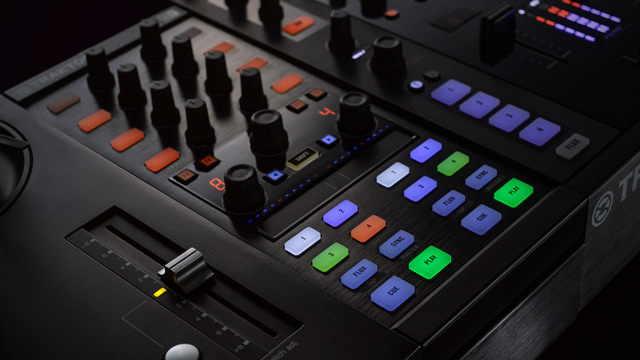
Native Instruments Traktor Kontrol X1-Mk2

 Native Instruments Traktor Kontrol X1-Mk2
 Native Instruments Traktor Kontrol X1-Mk2

On the page DJ Headphones we find great article about some great DJ Controler, and it's new Native Instruments Traktor Kontrol X1-Mk2. Below you can read full article, and if you wanna know more about this product, on the end of this article you can find some interesting links. 
 
TRAKTOR KONTROL X1 is the compact add-on controller engineered for seamless TRAKTOR integration.

    - Control two track decks and two TRAKTOR FX units
    - Touch strip controls track position, pitchbend, loops and FX
    - RGB backlit triggers identify cue points from loops or markers

The NI Traktor Kontrol X1 MK2 is a compact and modular Digital DJ controller that was built specifically for the full Traktor Pro 2 software that allows DJ’s to control file navigation, effects, loops, hotcues, Flux Mode, and other playback properties. The Traktor Kontrol X1 MK2 is the second iteration of the original X1 with some minor layout changes and the addition of a touch strip and loop counter readout that allows DJ’s to take even more control of their mixing than ever before. Watch our full review video for the complete rundown.


QUALITY AT YOUR FINGERTIPS

Built for maximum precision and flexibility in DJ performance, TRAKTOR KONTROL X1 boasts professional quality workmanship that offers both portability and a familiar layout.

Now redesigned, the new KONTROL X1 offers a new multi-purpose touch strip and intuitive touch-sensitive encoders for a powerful and portable DJ solution fit for any situation. The optional transport bag allows for safe transport and puts X1 at exactly the same height as standard mixers and other DJ hardware.

Unveiled Hyundai HND-9 concept

Hyundai HND-9 concept


Hyundai has revealed the look of the HND-9 concept, and he will be unveiled at the 28th March in Seoul.

HND-9 is the ninth Hyundai concept developed by R&D center in Namyang, South Korea. He announces the next generation design luxury sports coupe. The concept has butterfly doors, six-pointed grille, the body's spiral shape that go to the headlights.

Hyundai HND-9 concept

He is powered by 3.3-liter GDi turbocharged engine, which delivers 370 hp. Matched with eight speed automatic transmission, which transmits power to the rear wheels.


Apple smart watch efforts confirmed by US patent


Fresh evidence that Apple has been working on a smart watch concept since at least 2011 has emerged in a patent filing.

The document describes a flexible touchscreen display which would communicate with a smartphone or other electronic device.

It coincides with a report from a tech consultancy suggesting there is huge pent up demand for such a gadget.

But ABI Research warns that battery life issues still need to be addressed.

It says assuming such problems can be resolved, about 485 million wearable computing devices might ship by 2018, providing a significant growth opportunity for Apple and the wider consumer electronics industry.

Not all published patents lead to actual products, but Bloomberg, the Wall Street Journal and the New York Times have all published reports this month saying sources had confirmed Apple was experimenting with a watch-like device.

The iPhone-maker declined to comment when contacted by the BBC.

Slap wraps
The US Patent Office only revealed Apple's filing on Thursday, but the document dates back to August 2011.

The mooted device is likened to a "slap wrap" - a thin strip of metal covered in fabric which snapped around the user's wrist to form a bracelet.

The toy was popular with teenagers in the late-1980s, but fell out of favour after complaints that it lost its ability to retain its shape over time,. There were also complaints that some users had experienced injuries after the fabric wore away to reveal a sharp metal edge.Apple puts a hi-tech spin on the idea proposing a "slap bracelet" featuring a flexible circuit board and display, a touch sensitive user interface and a two-way communication chip, which would curl around the user's skin.

It suggests the gadget could detect which part of its surface was covered so that its readout would be limited to the exposed screen, with information flowing over the join.

Apple suggests lights along the device's edge could be programmed to blink when the user receives an alert, before displaying the details on its screen.

It says the user could then provide a brief response or use the bracelet to command a wirelessly connected smartphone, tablet or laptop to carry out another function such as adjusting the order of a song playlist or reviewing what recent calls had been made.

Apple acknowledges that the relatively thin nature of a wrist band would limit its uses, but suggests a wider armband could also be developed.

"At the width of a few inches the display can function to temporarily view and manipulate the screen of the portable device it is in communication with," says the paper.

"This might be desirable when the portable electronic device is stored in an inconvenient location such as a cargo pocket, or the bottom of a backpack."A larger display is also more desirable for map viewing... as a traveller or explorer can easily reference the information with a flick of the wrist while exploring."

Recharge worries
ABI Research notes that several companies already sell smart watches - such as Fossil, Pebble and Sony - while others (including Samsung and Martian) are known to be working on such products,

For the time being, however, it says the sector is dominated instead by activity trackers - such as Nike's Fuelband and the Garmin Forerunner - which account for an estimated 61% of the wearable tech market.

Some of these devices do tell the time, but they only offer limited functionality beyond monitoring exercise or the owner's sleep pattern.

The consultants instead suggest a much wider range of uses giving the example of linking the watch to a home automation system so that "a quick shake of your wrist can turn off/on room lights".

The idea of a smartwatch has been around for years - but the firm says technology only recently caught up with our imagination.

"Moore's law has driven silicon to the point where it's small enough and powerful enough to drive applications that mean things to consumers," ABI's chief research officer, Stuart Carlaw, told the BBC."Bluetooth Smart has also brought us high-bandwidth, low-energy connectivity at a less than a dollar a chip and takes up little space while offering robust performance.

"But one note of caution is that when we look at wearable technologies the use of power becomes an issue. You don't want to have to be plugging in four or five products a night to recharge - energy harvesting or wireless recharging technologies are going to become incredibly important."

Apple's patent confirms the company is aware of the problem.

It suggests harvesting energy from the movement of the user's arms and only coming out of standby mode when a sensor detects the device has been rotated to face a certain way.

It adds that the use of an AMOLED (active matrix light emitting diode) display would also help since it can allow individual pixels to be turned off, allowing the watch to only activate the parts which are facing the owner's eyes.

Apple loses Brazilian iPhone trademark ruling


Brazilian regulators have ruled that Apple does not have exclusive rights to use the "iPhone" trademark in the country.

But the US tech giant has already lodged an appeal against the decision with the Brazilian regulators.

The ruling is the result of a local company, Gradiente Eletronica, registering the name in 2000, six years before the US firm.

Apple can continue to sell iPhone-branded handsets in Brazil.

But the decision means that Gradiente has an option of suing for exclusivity in South America's biggest market.

The Institute of Industrial Property (INPI) told the BBC that its decision only applied to handsets, and that the California-based company continued to have exclusive rights to use the iPhone name elsewhere including on clothing, in software and across publications.

"I can confirm that INPI published today its decisions about eight trademark applications related to iPhone, from Apple: four applications were rejected and other four were approved," said the agency's spokesman Marcelo Chimento.

"Some were rejected because a Brazilian company, Gradiente, made an application for G Gradiente iphone in 2000 and it was approved in 2008. As Apple started its applications for iPhone in 2006, they were denied because Gradiente had a very similar register for cell phones applied some years before the American company.

"The trademarks approved today for Apple were related to other classes, such as education, software development and advertising. Since they are in other classes, different from communications and telephones, they could be approved."

Appeal
INPI added that Apple had argued that it should have been given full rights since Gradiente had not released a product using the iPhone name until December 2012.

Apple is asking the INPI to cancel Gradiente's registration through expiration - it is arguing that the Brazilian firm did not use the name within a five year limit.

The Manaus-headquartered company now sells its Android-powered iPhone Neo One for 599 reals ($304; £196).

Bloomberg previously reported that the chairman of Gradiente had said: "We're open to a dialogue for anything, anytime... we're not radicals."

Apple's most recent financial results revealed its cash reserves had grown to $137bn (£88bn).

The firm's manufacturing partner, Foxconn, currently produces iPhones and iPads among other equipment at its facilities in Brazil.

Why Facebook may want to track your location


Facebook may be working on an app that will let your friends, or even complete strangers, know where you are at all times.


If that sounds unpleasant, even creepy, you're not alone. But it sounds an awful lot like a small but growing mobile sector in which users knowingly sacrifice some privacy in exchange for "social discovery."
And, as Facebook works to make money off its constantly growing list of mobile users, such a feature raises questions about how the company will use the personal info it would collect.

On Tuesday, Bloomberg reported that Facebook is developing a smartphone app that would track the location of users. The app would run in the background of smartphones even when not opened and is designed to help users find nearby friends, according to one of two unnamed sources cited in the article.
A Facebook spokeswoman told CNN that the company has no comment about the report.

Social discovery, or stalking?

Some observers have expected such a move by Facebook since last year when the social networking giant bought Glancee, a mobile app designed to help users find nearby friends.That's similar to a handful of other mobile apps, such as Highlight, Banjo and Sonar. These services seem pitched mostly to a young, outgoing user base seeking existing or new pals for drinks, dancing, sipping coffee or sexual hookups. But, when applied to Facebook's purported 1 billion-strong membership, which includes everyone from teens to grandparents, it gives some privacy advocates pause.

"We've already seen some of the mishaps that can occur when location is used in unexpected ways," said Jules Polonetsky, director of the Future of Privacy Forum, a Washington-based think tank. "I think the challenge is that aggregating by location clearly might provide some really useful information. But there are a whole lot of social norms that can be stressed, by even public information."
Polonetsky cited Girls Around Me, an app that rounded up check-ins by women on Foursquare and Facebook to let users, presumably guys on the prowl, know which bars, clubs or other spots currently had lots of women in them. Girls Around Me raised concerns about stalking and eventually got booted from Apple's App Store.
"It didn't clearly violate any of the specific rules that the App Store lays out, other than extreme creepiness," Polonetsky said. "But creepy is sometimes in the eye of the beholder. One person's creepy is another tech enthusiast's tool."
The key, he said, would be whether Facebook clearly sets out guidelines for how such an app would be used. He said members should be allowed to opt in to the service, not automatically be enrolled in it unless they opt out.

"You don't want people ever sharing information without knowing, and I don't think Facebook is going to be in a position to do that," he said.

The future of social sharingHeralded briefly as the next wave of social sharing, a handful of these location-based "social discovery" apps launched last year amid some degree of hoopla. But a year later, none have gained much traction among mainstream audiences in the way Twitter, Foursquare and some other apps did before them.
Paul Davison, CEO of discovery app Highlight, acknowledges it's been a slow burn for a service such as his. A year after launching, Highlight still won't release how many active users it has (though he said membership has tripled in six months).

Privacy concerns, he said, are part of the challenge.
"That's not surprising," Davison said. "I think that any time a technology comes out that allows us to share in a way we haven't been able to share before, you see this really familiar pattern.
"Most of us look at it and think, 'That's weird. That's creepy and I don't like it.' What you normally see is a subset of people saying 'That is kind of crazy, but I'll try it out.' And they see it's pretty rewarding and fun."
Davison considers apps such as his no less than the future of social sharing.
"If you look at what's happened on the Web over the last 5 to 10 years with Facebook and other services, we love to share," he said. "We love to talk about ourselves ... and we're obsessed with learning about other people."
But for some, he said, the real world can be like "some bizarre social network where every profile is a single photo." On Highlight and similar apps, profiles are meant to let users know if someone around them shares their interests and might be a fun person to meet."It's a big change in how the world works," he said. "It's hard for me to think of a bigger shift in how the world works, but it's not going to happen overnight."

How Facebook might use app

Facebook-owned Glancee was somewhat more limited, pinging users when people already in their other social networks, such as Facebook, Twitter or LinkedIn, are around.
But for the folks from Mark Zuckerberg's company, such an app could have another payoff. Literally.
It would provide Facebook with reams of new data about not just where its users frequently go, but where they are right now.

Facebook said it doesn't sell its data to advertisers. But it definitely leverages the data to help those advertisers target potential customers. It's not hard to envision ads showing up letting users know that there's a 2-for-1 drink special right around the corner, or that the restaurant next door has the best burger in town.
"They need to make money on mobile, and that's what they've been pushing for since the IPO," said Justin Lafferty, co-editor of AllFacebook, an unofficial Facebook blog. "They're trying to build the technology first, then maybe find out how to build ads into it, too."

Lafferty, who wrote about this week's Bloomberg report, said Facebook could launch a social discovery app separate from its main mobile app -- at least at first.
"That's sort of how Facebook usually works," he said. "They'll test features, then they'll implement them all in the native app."

How will users react to such an app, were Facebook to launch one? Privacy advocate Polonetsky said that remains to be seen.
"The reality is that, for most people, even if things are broadcast to all their friends and the public, they still have some expectation about the way that it's used," he said. "I totally get that my neighbor knows when I come and go and may even say, 'We haven't seen you in a while -- is everything OK?'
"But if someone else seemed to know about my comings and goings and offered me a product or service based on it? I don't know."

Panasonic shares surge as it swings back into profit


Shares of Panasonic have surged 17% to 692 yen in Tokyo, after the firm swung back into profit in the third quarter.

On Friday, Panasonic reported a net profit of 61.3bn yen ($666m; £421m) for the October-December period, compared with a 197.6bn yen loss a year earlier.

Panasonic, which kept its forecast for a full-year loss unchanged, said a weak yen had improved business conditions.

Analysts said investors were hoping that a weak currency will help boost profits further in the current quarter.

"For the time being they are being rescued by the weak yen and it looks like they may have a good fourth quarter as well," Yuuki Sakurai of Fukoku Capital Management told the BBC.

The Japanese currency has dipped more than 15% against the US dollar since November last year.

A weak yen boosts profits of Japanese exporters such as Panasonic when they repatriate their foreign earnings back home. It also makes Japanese goods more affordable to foreign buyers.

"The hope is that if the yen continues to to remain weak then the losses could be less than what Panasonic had previously forecast," Mr Sakurai added.

The firm has said it expects to make a net loss of 765bn yen for the financial year to 31 March 2013.

Panasonic has seen its fortunes slide in recent years amid a slowdown in global demand and falling prices for TVs.

To make matters worse, it has also had to face strong competition from rivals, including South Korea's Samsung which has grabbed a big share of the global TV market.

In its latest results, Panasonic said that global demand for flat-panel TVs and digital devices had weakened further.

It said its overall sales in the last quarter fell 8% on the year to 1.8 trillion yen.

Analysts said that the firm had been too reliant on its TV business over the past years, and that it needed to rethink its strategy.

"People are still sceptical if the business model of Panasonic will be successful in the long run," said Fukoku Capital Management's Mr Sakurai.

For its part, Panasonic has been trying to restructure its business. But it has previously warned that the costs related to such moves may be almost 11 times more than previously estimated.

Mr Sakurai added that while the drop in the yen's value was a welcome relief for Panasonic, until it addresses the long term issues, the firm's future remained uncertain.

"If the basis of a profit surge is just the weak currency, then than that is always going to be risky," he said.

"For all you know, the yen could start to rise again and things may be back to square one for Panasonic."

HTC sees Q1 revenue flat to 17 percent lower versus Q4

Taiwanese smartphone maker HTC Corp expects revenue to be flat to 17 percent lower in the first quarter compared with the previous three months, worse than forecast, while margins are also seen holding steady or shrinking.


The former contract manufacturer's fortunes have been declining sharply since the second half of 2011, as the growing dominance of Apple Inc's iPhone and Samsung Electronics Co Ltd's Galaxy range quickly deflated the success of its own brand's rapid rise.

HTC said on Monday that it expects first-quarter revenue of T$50 billion to T$60 billion ($1.69-2.03 billion). That compares with T$60 billion in the fourth quarter and T$65.75 billion a year ago.

Analysts have forecast HTC would earn revenue of T$62.77 billion for the quarter, according to the average projection of 18 analysts polled by Thomson Reuters I/B/E/S.

HTC also said it expects a first-quarter gross margin of about 21 to 23 percent, flat to lower from 23 percent in the prior quarter, and an operating margin of 0.5 to 1.0 percent, also flat to lower from 1 percent.
The weaker-than-expected first-quarter revenue outlook follows a 91 percent year-on-year slide in the Taiwanese company's net profit in the fourth quarter that fell short of analyst forecasts.

Analysts doubt that 2013 will be a turnaround year for HTC as the strength of its brand lags far behind Apple and Samsung.

But some have said that the next version of its flagship smartphone, code-named "M7" and which they expect to be launched in the middle of this month in New York and London, could give the company a first-mover advantage of a few months on features such as higher-resolution cameras.

Samsung Electronics, the world's top smartphone maker, said last month that it expected the global smartphone market to shrink in the first quarter from the seasonally strong fourth quarter, while the overall handset market would see growth at a mid single-digit percentage rate this year from 2012, with the smartphone segment set to slow.

Strong smartphone sales powered an 89 percent increase in operating profit at the Korean company in the October-December quarter to a record $8.3 billion.

Cupertino, California-based Apple, which faces intense competition from Samsung, sparked a slide in its share price late last month when it forecast lower revenue of $41 billion to $43 billion in its current fiscal quarter, down from $54.5 billion in the previous quarter and below the average Wall Street forecast of more than $45 billion.

On Monday, shares of HTC fell 1.6 percent, versus a 0.9 percent rise in broader market. HTC's shares have fallen more than 40 percent since the start of last year, compared with a 12 percent rise in the Taiwan stock benchmark.

Microsoft launches Office 2013 software suite


Microsoft has launched a new version of its Office software suite.

Word, Excel, Powerpoint and Outlook have been redesigned to work better with touch-screen-controlled computers.

They also integrate the firm's Skype video chat facility. Users can add further functions via a new app store.

The programs account for a major part of Microsoft's earnings. The firm hopes to keep users loyal by offering more powerful features than cheaper online alternatives.

In the last year the firm's Business Division, which creates the software, generated just under $24bn (£15.2bn), roughly a third of the firm's revenue.

However, a 4% dip in the US company's most recent quarterly profits was linked to the fact that many consumers had held off buying the older version of the software ahead of the revamp.

If it proves a success it might also drive sales of new Windows 8 or Windows RT-powered computers, which can take advantage of the applications' improved touch controls.

Studies suggest users are switching to the systems at a slower rate than they adopted Windows 7 and Windows Vista.

Microsoft confounded rumours by not releasing a version of the Office software for Apple's iPad tablets. It has also decided not to offer the products on Android devices.

Cloud storage
The retooled software offers a touch mode that makes several of its controls bigger so they are more finger-friendly as well as including the ability to swipe and pinch-and-zoom documents. Files can also be viewed in "read mode", which displays them in a format that particularly suits tablets.

By default, files are saved to the firm's SkyDrive online cloud storage facility, although users can choose to save them on their hard drive if they wish.

Additional plug-ins are available from a new Office Store. These include the ability to add Twitter functionality to the Outlook email tool and to consult Encyclopaedia Britannica articles from within Word.

Many of these are free, although US firm Sensei Project Solutions is among the first to charge a fee, for its "task analyser", which is designed to identify problems or missing information in users' documents.

Subscription bundles
Consumers can buy the suite for use on one PC for $140 - £110 in the UK - but Microsoft appears to favour a subscription deal for its Office 365 Home Premium edition, which is the focus of the promotional activity on its site.

This charges $100 (£80) for one year's access on up to five PCs or Macs and bundles in 60 minutes of Skype calls a month as well as more SkyDrive storage.The prices mark a discount on the fees the company used to charge for Office, reflecting the competition it faces from the growing popularity of cheap and free alternative applications offered by Google, Zoho, Apache OpenOffice and others.

"Over the past two years Office has been Microsoft's largest revenue stream," Colin Gillis, senior tech analyst at BGC Partners, told the BBC.

"But it's more than just sales - it's the glue that keeps users coming to the Windows operating system.

"It's the one thing that the iPad doesn't have. Microsoft is missing out on revenue by not selling it for Apple's device and at some point they may have to in order to prevent an alternative blossoming - but for now it gives an edge to Windows and the company's own Surface devices."

A version of the online Office 365 apps for businesses is due for release on 27 February.

Acer tips quad-core low-cost tablets for 2013


Acer Iconia B1 Tablet


 Acer tips quad-core low-cost tablets for 2013

Acer has already received some positive attention for its Iconia B1 tablet, which is a 7-incher that’s aimed at the budget crowd. Looking to take a slice of Google’s Nexus 7 pie isn’t easy, but it seems that Acer wants to push forward by offering new budget-friendly tablets in 2013. Specifically, it appears that Acer CEO Linxian Lang told the China Times that it will have low-cost 8 and 10-inch tablets coming up later this year.

These tablets are said to have a price point ranging from 150 to 175 Euros, which puts them at about $202 to $236. That certainly isn’t bad considering how expensive some tablets can get, but of course, pricing hasn’t been set in stone yet, so that could change. These tablets will also come packed with quad-core processors, which will make them all the more attractive to those looking for a deal.

So, in 2013, we may see Acer try to corner the entry-level market. That isn’t a bad idea, because while others like Apple and Samsung duke it out over the high-end tablet crowd, Acer can make its tablets appeal to more mainstream users. That could potentially result in quite a few sales, so provided Acer can offer these quad-core tablets on the cheap, it might just have a winning strategy on its hands.

Lang discussed the tablet market when talking to the China Times, saying that the company expects 200 million tablets to be sold this year. Of those 200 million, 80 million will be expensive high-end devices, leaving 120 million sales to the mainsteam crowd. If those projections are accurate, then there should be plenty of market share to capture when it comes to entry-level and mid-range tablets. We’ll have to wait and see if Acer makes any formal announcements for these tablets, so stay tuned.


BlackBerry 10 faces uphill struggle

In the end, Carole Blake simply took a hammer to her BlackBerry smartphone, and smashed it into pieces. The London-based literary agent had had enough of what she saw as increasingly unreliable service.

In October 2011, BlackBerry servers were down for days including her time at the Frankfurt book fair. But that was just the beginning of her BlackBerry problems, as her handsets also started malfunctioning. "Four in a year left me frothing," she explained.

She switched to an iPhone 5. "It took five minutes to adjust, helped by having used an iPad. My unreliable BlackBerry was hurting business," she said.

For Research In Motion (RIM), the Canadian company that invented the BlackBerry, Blake's story illustrates some of the many blows to the company over the past two years.

Millions of users, and hundreds of businesses, have deserted BlackBerry for Apple, or Android phones such as Samsung's Galaxy S III, or Nokia. RIM suffered huge global operating losses last year including $643m in a single quarter and the board ejected its two co-founders, Mike Lazaridis and Jim Balsillie, replacing them with operations chief Thorsten Heins.

So Wednesday is a very big day for BlackBerry, when Heins will unveil the company's latest offerings to try to reverse the tide and tempt back Blake and millions like her in what some analysts see as a last chance to survive.

Two new mobiles – one with a keyboard, and one with only a touchscreen – will showcase its new BB10 software, which brings a completely new interface to the phone once known as the "CrackBerry" because of its ability to serve round-the-clock email to workaholics.

Heins realises that he has a huge challenge but he recently told Die Welt that he believed RIM's role in the future will be substantial and that the new software is aimed not only at phones but also for cars. "We have taken the time to build a platform that is future-proof for the next 10 years," he said.

Benedict Evans, of Enders Analysis, sees BB10 as a last roll of the dice: "The question is, how long can they keep rolling it? How long can they wait for the right numbers? The high-end corporate users are abandoning it." Evans added that from talking to people in phone shops, it seemed teenagers were keen on rivals with more games apps.

Carolina Milanesi, smartphones analyst at research group Gartner, said the company cannot carry on as before. "This is certainly key to RIM's survival and indeed BBM is just not enough anymore," she said."Even consumers that are price sensitive and who value messaging are looking for more than BlackBerry Messenger." BBM – the free messaging service that was blamed for helping rioters organise during the UK riots in summer 2011 – no longer ties people to the brand either. The rise of rival services such as WhatsApp, which has an estimated 100m users worldwide – compared to BBM's 79m. WhatsApp also lets users send text-style messages for free but works on any smartphone.

All of that means Heins and RIM have a mountain to climb. They have to tempt back people such as Mamun Ahmed, who switched from a BlackBerry to a phone using Google's Android software: "Being a BlackBerry user I started realising that, I couldn't keep up with the 'tried the cool app' trend, as very few app makers were making apps for BlackBerry," he said.

His bank only offered apps for the iPhone and for Android phones. He said: "All of the websites I was using on a day-to-day basis seemed only interested to make apps for the iPhone and Android and totally ignored others."

That has meant a flight of users – so pronounced in the US that in October the New York Times ran a story about people being embarrassed to show their BlackBerry in public. Heins wrote to the paper saying the article "lacks the balance" expected, saying "there are millions of BlackBerry fans out there who not only find value in their device, but also pride in being a BlackBerry owner."

Some remain loyal. Abigail Rudd, a student at Exeter University, stuck with her BlackBerry rather than buying an iPhone when she renewed her contract last April because it is more robust than other models. "In addition, the keyboard is great," she said.

Yet the outflow continues. ComScore, which calculates US smartphone ownership, reckons that there are now just 9 million BlackBerry users in the US, down from a peak of nearly 22 million in September 2010, while US smartphone ownership has doubled to 123 million.

Embarrassment can be a factor. Jamie Fox, in charge of communications for the TeamGB Ski and Snowboard teams, finally switched after 10 years with BlackBerry to an iPhone 5 this month. "I was just on a ski trip with [2012 long jump Olympic gold medallist] Greg Rutherford and [Olympic runner] Andrew Strong and was relentlessly ribbed about still having a BlackBerry. Whenever it was taken out in the bar, loud cheers would go up and the mocking would begin," he said.

But he had also become dissatisfied with the battery life, app choice and camera quality of the BlackBerry.


RIM has also lost its favoured position as the handset of choice with business people. It has lost corporate and government contracts, some in the wake of the service outage. Businesses which used to hand out BlackBerrys are often replacing them with iPhones, where the galaxy of apps (sometimes custom-made) and better web browsing are pushing the BlackBerry aside. The prestigious contracts that RIM has lost in the past two years include the US National Oceanographic and Atmospheric Administration, the US National Transportation and Safety Board and the US Immigration and Customs Enforcement Agency. In November, even the Pentagon sought to let in Apple and Android phones, even while stressing that it would still hold on to some BlackBerry phones.


The key to a BlackBerry revival, suggests Francisco Jeronimo, smartphone analyst at IDC, will be whether it can persuade those corporate customers – the segment where it first grew to fame as Wall Street financiers discovered they could get secure email while out of the office – to stay with it. "They could survive. You won't compare them to Apple and Samsung but they could be in the top five handset makers. If they can manage to regain trust from the companies who have been clients, they can survive, profitably, just by staying small and focused," he said.

And if they don't persuade those companies? "If they can't, it will be very hard," he said. At worst, RIM might be broken up for the value of its patents which are considerable.

Fox, for one, found his BlackBerry a source of irritation. "The big annoyance was the random red light flashing [on the top of the phone]. It wouldn't be for an email, but for some random BlackBerry update. And I could never get it to stop. So distracting. On the whole, it's just outdated," he said.

Persuading people that it is not is the task that lies ahead of Heins. Most of all, he wants to stop that red light going out.

Anonymous hackers target US agency site


Hackers claiming to be from the activist group Anonymous have hacked a US government website in response to the death of Aaron Swartz.

Activists embedded a video statement on the homepage of the United States Sentencing Commission, an agency of the US government.

The statement referred to the death of Mr Swartz, an internet activist who apparently killed himself in January.

"Two weeks ago today, a line was crossed," the statement said.

"Two weeks ago today, Aaron Swartz was killed. Killed because he faced an impossible choice. Killed because he was forced into playing a game he could not win."

Mr Swartz, who was 26, was facing hacking charges and is believed to have taken his own life.

His federal trial was due to be held next month. If found guilty, he could have faced up to 35 years in prison.

Following his death, Mr Swartz's family released a statement blaming "intimidation" and "prosecutorial overreach" from the criminal justice system.

'Operation last resort'
The attack on the website was scheduled to begin at midnight eastern standard time, according to documents that appear to have been posted online by Anonymous activists.

Later on Saturday the website was not functioningThe USSC is responsible for issuing sentencing guidelines for US federal courts.

The hackers, who had labelled the attack "Operation Last Resort", said the site was chosen for symbolic reasons.

"The federal sentencing guidelines... enable prosecutors to cheat citizens of their constitutionally-guaranteed right to a fair trial, by a jury of their peers [and] are a clear violation of the 8th amendment protection against cruel and unusual punishments," the video statement said.

The statement also suggested the hackers had sensitive information relating to a number of US judges that may be made public.

There have been numerous attacks by hackers operating under the Anonymous banner in recent months.

On Thursday two British men were jailed after taking part in an attacks on payment services including Paypal, organised by Anonymous.

Government websites of the UK and other countries have also been the subjects of attacks.

Samsung Galaxy Note 2 review: The ultimate anti-iPhone

Samsung Galaxy Note 2

Samsung Galaxy Note 2 review: The ultimate anti-iPhone


You're probably wondering how good the massive, tabletlike Samsung Galaxy Note 2 is, and if the smartphone can fulfill important tablet functions.

You may also wonder if the Note 2's 5.5-inch screen makes it too unwieldy to hold and carry as an everyday device, and if its battery quickly drains in service to the monster screen. Can the quad-core processor keep up, and will it defeat the purpose if you never slide out the Note's digital pen?

My answers are mostly positive. Yes, the second Note is huge in the hand and awkward at times to hold, but I quickly grew used to it. In specs, it's Samsung's highest-end phone, with Android 4.1 Jelly Bean OS, a speedy quad-core processor, an extra-large battery, and an 8-megapixel camera.

The good: Oodles of screen real estate make the Samsung Galaxy Note 2 terrific for videos, games, and reading; and its improved stylus aids productivity. A blazing quad-core processor, a great camera, and strong battery life round out the advantages of this Android 4.1 phone.

The bad: The huge display makes the Galaxy Note 2 unwieldy to carry, and hiccups in the S Pen stylus and apps can slow you down. The pricey Note 2 isn't a suitable tablet replacement across all categories.

The bottom line: Samsung delivers a powerful, boundary-pushing device that gets a lot right. Yet its complicated features and high price raise questions about its purpose.

Apple Drops Chinese Supplier For Using Underage Labor


Apple has stopped doing business with a Chinese manufacturer after a report said it had employed 74 underage workers. According to Apple's Supplier Responsibility Report, which was released by the company Thursday, Guangdong Real Faith Pingzhou Electronics was employing workers under the age of 16.

"Our auditors were dismayed to discover 74 cases of workers under age 16 — a core violation of our Code of Conduct. As a result, we terminated our business relationship with PZ," the company says in the report.

Apple has now lost its spot as the most valuable publicly traded company, one year after it first firmly overtook ExxonMobil. Even though it announced a record number of iPhone and iPad sales in its last quarter earnings, its stock price has fallen over 12 percent.

Apple says it is working hard to improve labor conditions at the factories of its Chinese contractors. It said it also discovered that one of the region's labor agencies had conspired with the manufacturer, providing children to them and helping forge age-verification documents. Apple said in its report that it alerted the provincial government, which fined the agency and suspended its business license."The children were returned to their families, and PZ was required to pay expenses to facilitate their successful return," Apple says in the report.In an interview with Bloomberg, Apple's Senior Vice President of Operations, Jeff Williams, said child labor was being used more than companies care to admit. "Most companies, they either don't report on it at all, or they say they look for it and found none, or they obscure the data in some way," Williams told Bloomberg. "If they're not finding it, they're not looking hard enough."

ABC News' Bill Weir visited the factory of Apple's Foxconn supplier last year and did not see any underage workers. "But while we looked hard for the kind of underage and maimed workers we've read so much about, we mostly found people who face their days through soul-crushing boredom and deep fatigue," Weir wrote about his visit.

In the 37-page Supplier Responsibility Progress Report, which can be viewed here, Apple said there had been a 72 percent increase in facility audits. According to the report, Apple achieved an average of 92 percent compliance with the goal, for now, of a maximum 60-hour work week.

Apple vowed last year to improve working conditions at its manufacturing facilities in China, vowing to work specifically on reducing working hours for Chinese workers. In March 2012, the Fair Labor Association released a report on the poor conditions at Apple's Foxconn supplier. The organization gave a long list of recommendations to Apple and Foxconn, and both Apple and Foxconn agreed to follow them.

In August, the FLA said that that Foxconn had completed 280 action items on time or ahead of schedule. By July 1, 2013, Foxconn has promised to reduce workers' hours to 49 hours per week and stabilize pay -- though the limit is rarely enforced because workers often want to work overtime and make ends meet.

Apple announced in December that it would begin to make some of its Mac computers in America in 2013.

Antigua applies for permission to run 'pirate' website

Photo - Ilustration
Antigua is seeking permission to run a website that sells music, movies and software - but ignores copyright law. The Caribbean island is due to appear before the World Trade Organization (WTO) on 28 January seeking permission to run the site. The decision to set up the site is the end point of a long-running dispute with the US over gambling. The US has objected to Antigua's plan saying it amounted to official "piracy" of intellectual property.

Officials from Antigua will make their plea before the WTO's dispute settlement body on Monday to get "final authorisation" to set up the site, Mark Mendel, a lawyer representing the island nation told the BBC.

Antigua went to the WTO after the US moved to stop American citizens using gambling services, including web-based betting shops and casinos, run from the Caribbean country. Antigua claims that action deprived it of billions of dollars in revenue.

The WTO agreed with Antigua and dismissed a US appeal against its ruling. However, because the US took no action to lift the controls on cross-border gambling Antigua filed an application to recoup its lost cash by other means.

'Official pirates'


It sought permission to sell movies, music, games and software via a store that would be able to ignore global agreements on copyright and trademark controls, reports filesharing news site TorrentFreak. It wanted to be able to sell up to $3.4bn (£2.15bn) of those goods before having to make copyright payments.

The WTO rejected that figure, but said Antigua could sell $21m (£13.2m) annually via the store before it had to consider paying copyright fees. The US is believed to have offered to pay Antigua $500,000 annually as compensation for the lost revenue.

The US has also written to the WTO criticising Antigua's plans. In a letter to the WTO, excerpted on the Caribbean 360 news website, it said the plan amounted to "government-authorised piracy". It also warned that if Antigua did go ahead with its plan "it would only serve to postpone the final resolution of this matter, to the detriment of Antigua's own interests".

Mr Mendel added that just because Antigua had permission to run the site did not mean it would go on to set it up.

"When or exactly how it will do so is within the government's discretion and will be considered and taken or not in due course," he said.

US phone unlocking deadline set to expire

US phone unlocking deadline set to expire
From Saturday, Americans will have to get permission to "unlock" their smartphone so it runs on more than one mobile network.

On that date a 90-day time limit that made it legal to unlock phones without permission is due to expire.

Many Americans unlocked their phones to avoid running up big bills when travelling outside the US.

An online petition has been started asking for unlocking without permission to be made permanently legal.

In October 2012, a change was made to the US Digital Millennium Copyright Act (DMCA) that temporarily allowed owners to unlock their smartphones without the need to ask their network beforehand.

Prior to the change, owners were typically charged a fee when they asked their operator to unlock a phone. Alternatively, users could buy unlocked versions of smartphones from manufacturers, but these handsets were typically more expensive than those locked to one network.

When Saturday's deadline passes, users will again have to seek permission.

However, it is not clear what action will be taken against customers who ignore the law. The Electronic Frontier Foundation, which campaigns on digital issues, said in an email to Tech News Daily it should be up to the courts not the government to decide to what the DMCA applies.

In addition, many online services have sprung up that unlock phones for a small fee and some have said the change will have no effect on them.

Also, some US operators, such as Verizon, unlock all phones of a particular type they sell. AT&T is known to unlock all phones on an expired contract for its network.

So far, about 3,500 people have signed a petition on the White House website asking for unlocking to be legal all the time - 100,000 signatures are needed before the US government responds.

Unlocking a phone is distinct from a practice known as "jail-breaking" that opens up a phone so software from unofficial sources can be run on it. Jail-breaking remains legal in the US.

Sony unveils "thinnest" tablet

Sony Xperia Z Tablet

Sony has unveiled what it says is the thinnest tablet computer of its kind. The Android-powered Xperia Z is 0.27in (6.9mm)-thick. That is 0.01in thinner than Apple's iPad Mini despite featuring a bigger 10.1in screen.

It coincides with news that LG is releasing a 5in handset - the Optimus G Pro - making it the latest to offer the so-called "phablet" form factor.

Both devices have only been confirmed for release in Japan, but more details are expected next month.

Mobile World Congress is being held in Barcelona from 25 to 28 February and is a popular time to announce global launches of new smart devices. Samsung has already said it would show off a new 8in version of its Galaxy Note tablet family at the event.
 

Sony Xperia Z Tablet is water-resistant


Beyond being thin, Sony's new tablet can also lay claim to being the lightest for its size. The firm says it weighs 1.1lb (495g) - a fraction below the Toshiba Excite 10 LE which previously laid claim to the title.

In addition it is water and dust-resistant - featuring similar plastic covers to protect its ports as are found on the firm's Xperia Z smartphone which was announced a fortnight ago at the Consumer Electronics Show (CES) in Las Vegas.

The two Sony devices are designed to work together, allowing photos and other data to be transferred between the phone and tablet using the firm's "one-touch sharing" facility which is activated by waving the machines close to each other to activate their near field communications (NFC) chips.

"It's a good product and on the face of it it should do well, but it is hampered by a potential squeeze on the larger tablet segment as a lot of consumers and other manufacturers are moving to the smaller 7in-to-8in form factor - in part because of their cheaper price," David McQueen, principal analyst at the Informa Telecoms and Media consultancy, told the BBC.

"So the success of the Sony tablet might ultimately be determined by how much it costs as well as whether the firm bundles some of the content it owns from its music, movie and gaming divisions."
Packed pixels

LG Optimus G phone

LG Optimus G phone
LG Optimus G phone


LG's new handset is effectively a version of its existing Optimus G phone with a bigger, more detailed screen.

It offers 440 pixels per inch (ppi) - matching HTC's newly-released J Butterfly and Huawei's Ascend D2.

This density of its pixels allows LG's handset to be marketed as offering playback of 1080p videos in their full high definition resolution.

However, the trade-off is the screen is power-hungry. LG's handset features a 3,000 mAh (milliampere-hour) battery as a consequence which is bigger than that of most other smartphones.

"4G high-speed data connections are helping push the adoption of higher definition bigger screens on phones," said Mr McQueen, "but I do think it will remain a small, though high-end, segment of the market."

NEC Casio have Two screens

NEC Casio with two screens

 
Sony and LG's devices were revealed as part of Japanese network NTT Docomo's Spring line-up announcement.

It also featured a more unusual handset from NEC Casio featuring two screens.

The Medias W N-05E's displays are placed on either side of the device, but can also be folded out so that the two 4.3in LCD screens sit alongside each other.

It is the second dual-screened smartphone to be announced in recent weeks - Russia's Yota unveiled a model in December which features one LCD screen and one e-ink display, which it said would go on sale in the second half of the year.

However, recent history suggests such devices might only appeal to a niche audience.

Samsung, LG and Kyocera are among others firms to have released dual-screened phones over the past two years which only achieved limited sales.

article source: BBC.co.u

The scattered, futuristic world of home automation


The world of automated home gadgets is young and exciting, filled with an abundance of promising new products. It's also a bit of a mess.

At the 2013 Consumer Electronics Show in Las Vegas, there were devices and smartphone apps to control everything in your home. But there are so many conflicting approaches, setups, standards and systems that the real dream of a fully connected home is still a ways off.

In previous years, the connected, or "smart," home world was mostly aspirational, with prototypes of fridges with Internet-connected displays and elaborate home security systems. But this year the Jetson's home is a finally a reality, with major vendors peddling real, usable products, almost all controllable from a smartphone.
There are home security cameras you can monitor from anywhere, motion sensors that trigger lights or send you a text message. A product called Plant Link monitors your plants' moisture levels and texts you when they need water. There is a sensor you can put on your grandmother's teapot that will alert you if she forgets to have her morning cuppa. You can control blinds, check air quality, see if windows are open, unlock your house from halfway around the world for a visitor, or use GPS to have your heater turn on when you're a certain distance from home. The possibilities are endless.

How does something as low-tech as a light connect to your smartphone? Typically, the "dumb" end devices (light switch, electrical outlet, thermostat) are outfitted with wireless modules. They communicate using Wi-Fi or other wireless technology with an Internet-connected hub device, which collects the data and bounces it to the cloud. That information is then accessible from a computer or smartphone app, the light controllable with the tap of a finger from anywhere in the world.

-->
Explaining the 'Internet of Things'
Unfortunately, with the excited rush to get out new products and try new things, most devices or systems don't yet play well with others. Consider the Philips Hue, a cool, color-changing smart light bulb that's sold in Apple Stores. The bulbs connect to a Philips Hue hub, and you change their colors with the Philips Hue stand-alone app.

You can't add a third-party pet door opener or radio controller to the Philips hub, or control them from the Philips Hue app. That means you can't program the kitchen lighting to turn blood red and set the stereo to play "Eye of the Tiger" every time your tabby saunters in for dinner.
"Theoretically, they should all work together," said Daniel Moneta, chief executive of MMB Networks, a company that helps equipment manufacturers transform their analog products into smart devices. "But innovation tends to happen at a faster pace than standards."
The trend of individual devices and sensors having their own smartphone apps and cloud infrastructure is unsustainable. Imagine having to sort through 50 apps to find the right lock, or opening each app one at a time to set up vacation settings before a trip to Death Valley.
Big companies such as Comcast, Time Warner and Lowe's have taken a stab at consolidating smart home technology with their own connected home solutions. They have convenient pre-packaged systems that include the central hub, the smartphone app, and starter devices like security cameras or energy monitors.

China to lead in automation
These systems have their drawbacks. Many charge a monthly fee. They will sell approved additional devices to add on to the network, so it's expandable, but you are still locked into their ecosystem.
Then there are the standalone devices that pack the computing power into the object itself, such as the popular Nest programmable thermostat. There's no hub, it just uses Wi-Fi and the Nest app, and it can't connect to other home management systems.
"At the end of the day, putting the intelligence into a single device misses the bigger picture," said Jeff Hagins, chief technology officer of SmartThings, a startup working on its own platform for smart homes. For Hagins, who has 95 smart devices connected in his own house, the real power of connected devices is in the apps and writing programs that link objects together. The air conditioner that doesn't turn on because it knows a window is open.
To complicate things further, current smart devices don't all speak the same language. There are competing short-range wireless technologies for connecting smart object. In addition to Wi-Fi there's ZigBee and Z-wave, which use less power and are easier to connect. Unlike Wi-Fi, they can be used to create a network of devices that communicate with each other, passing on signals from objects in far off areas of the home.
SmartThings will release its own starter kits this Spring, $299 boxes that include a hub and five or six devices that connect to SmartThings app. But the company is planning an open platform that supports all three wireless standards, doesn't charge monthly fees and allows any third-party device to jump on the system and app. Developers can write smaller apps that work inside the main mobile application, coming up with creative ways to link objects together. The startup raised $1.2 million on Kickstarter last year and is backed by some big-name venture capitalists.
Whatever the future of smart homes looks like, it will need to be dead simple, affordable and easy to use. There are still potential security and privacy issues that have to be worked out. But the options will narrow down, the technology will become more consistent and a smaller number of remote control apps will crowd your smartphone. Next up, flying cars.

O2 urges rivals to stop providing chargers with new phones


O2 has urged its industry peers to stop giving away chargers with new mobile phones, after a trial found the vast majority of customers were happy to buy handsets without chargers.

The telecom giant yesterday announced the results of a three-month pilot scheme, which saw it sell HTC One X+ handsets without the USB chargers they usually come with, but still with a detachable USB cable.

O2 had expected 70% of customers would be happy to take the greener option as most people already have a compatible charger at home. Anyone wanting an additional charger could buy one at cost price.

In fact, 82% of One X+ customers agreed to buy the handset on its own since the trial started in October, exceeding O2's expectations.

O2 believes there could be 100m unused chargers in people's homes and offices, enough to fill four Olympic-sized swimming pools if thrown away.

The company now estimates there would be 24m fewer charges sold in the UK each year if the results of its pilot were applied to the 30m new phones sold annually.

Ronan Dunne, chief executive of O2, urged other mobile retailers to follow its lead and pledge to phase out the automatic inclusion of chargers at the point of sale.

"The results of the trial demonstrate a clear willingness among consumers to consider and respond to the environmental argument for taking a phone charger-free," he said. "I now hope that as a result of this study the rest of the industry will now consider joining us in our campaign to take chargers out of the box for good."

Last year, O2 pledged to phase out mobile phone chargers for all new phones by 2015, as part of a broad new sustainability programme. At that time, Bill Eyres, O2 head of sustainability, predicted just 60 per cent of people would be prepared to buy a charger-free phone.

However, the results show people are receptive to the idea of reducing electronic waste, if they are given the right information.

"These trial results offer powerful evidence that customers are prepared to amend their purchasing decisions if they have more choice and more information," added Dunne.

"The lesson for the industry from this pilot is that consumers are very receptive to the message that they can benefit the environment by avoiding the needless purchase of chargers. I would now like to see others taking similar steps, working with us as we aim to ensure all our handsets are sold charger-free by 2015."

In 2009, leading mobile phone makers, including Samsung and Apple, signed an EU resolution to create a single universal charger, based on a micro USB connector by January 2012, in an effort to reduce unnecessary waste

However, Apple appears to have backtracked on the pledge, introducing its own new Lightning Charger for the iPhone5 last year.

Nokia backs 3D printing for mobile phone cases


Nokia is releasing design files that will let owners use 3D printers to make their own cases for its Lumia phones

Files containing mechanical drawings, case measurements and recommended materials have already been released by the phone maker.
Those using the files will be able to create a custom-designed case for the flagship Lumia 820 handset.
The project makes Nokia one of the first big electronics firms to seriously back 3D printing.

In a blogpost, John Kneeland, one of Nokia's community managers, revealed the Finnish phone maker's decision to release the 3D drawings.

Printing in 3D involves sending a design file to a printer that then forms a solid version of that object by slowly building it up in layers of plastic. Early 3D printers could only work in one colour but the latest versions can produce intricate, multicoloured objects.

Industrial sequel
Mr Kneeland said Nokia was releasing what he called a "3D printing development kit" to help people produce the cases. The files are already available on the site Nokia maintains for its developers.

He said 3D printing was another way that the firm wanted to build links to that vast community of software and hardware engineers. To get the files, users must have registered with Nokia.

He said Nokia already used 3D printing internally to do rapid prototyping, but decided to back it more publicly to help the nascent technology realise its "incredible potential".

In the future, he said, 3D printing was likely to bring about phones that were "wildly more modular and customisable".

Nokia might just end up selling a phone template, he said, allowing entrepreneurs to use that to produce handsets that satisfy the particular needs of their locale.

"You want a waterproof, glow-in-the-dark phone with a bottle-opener and a solar charger? Someone can build it for you - or you can print it yourself," he wrote.

He added that, in his view, 3D printing was a technology that justified its hype and said it was "the sequel to the Industrial Revolution".

"However, it's going to take somewhat longer to arrive than some people anticipate, and that may disappoint people," he said.

Facebook adds free calling feature for US iPhones

Facebook 'free call' to iPhone with FB messenger

Facebook 'free call' to iPhone with FB messenger


Facebook has added a feature in its mobile phone app that allows free calling for US iPhone users. Users can now make calls to each other via the Facebook Messenger app anywhere they have a wi-fi or a cellular-data connection. The feature could be a boon for heavy talkers as they would avoid carrier call charges.

Facebook said it was working on adding the feature to its Messenger app for Android and BlackBerry users. Within the app, all a person needs to do is open a conversation with a partner, tap the "i" icon in the upper right hand corner and select "Free Call".

The calls, however, can only be made to another user who has Messenger installed on their iPhone. Users can neither call a Facebook friend who is logged in through the website or call a landline.

The latest mobile-to-mobile development was independent of the free video-calling software Skype, which was already integrated into Facebook's website, a spokesman said. The Messenger app is limited to voice calling.

The official said Facebook was expected to roll out the feature in its Messenger app for other operating systems and expand it overseas.

On Tuesday, Facebook unveiled a smart search engine - called Graph Search - that allows users to make "natural" searches of content shared by their friends.
 
Support : Creating Website | Johny Template | Mas Template
Copyright © 2011. Daily Headlines - All Rights Reserved
Template Created by Creating Website Published by Mas Template
Proudly powered by Blogger