Headlines News :
Showing posts with label china. Show all posts

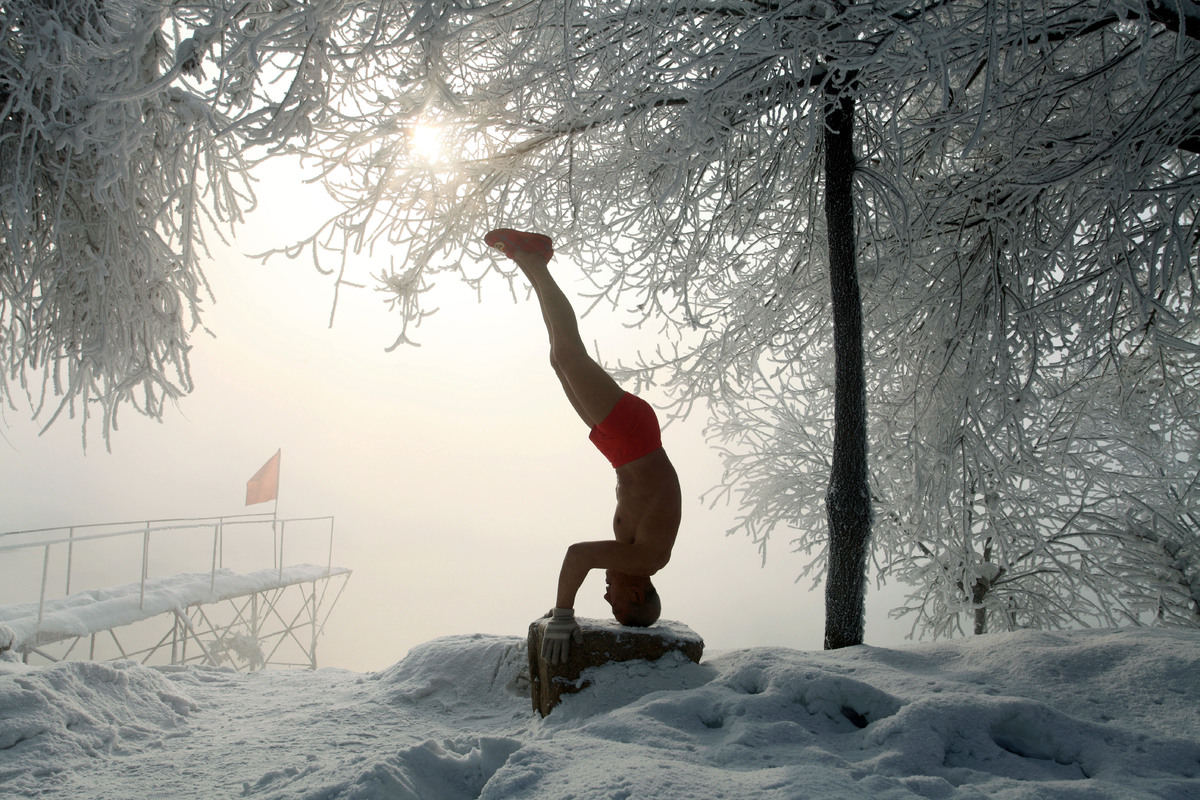
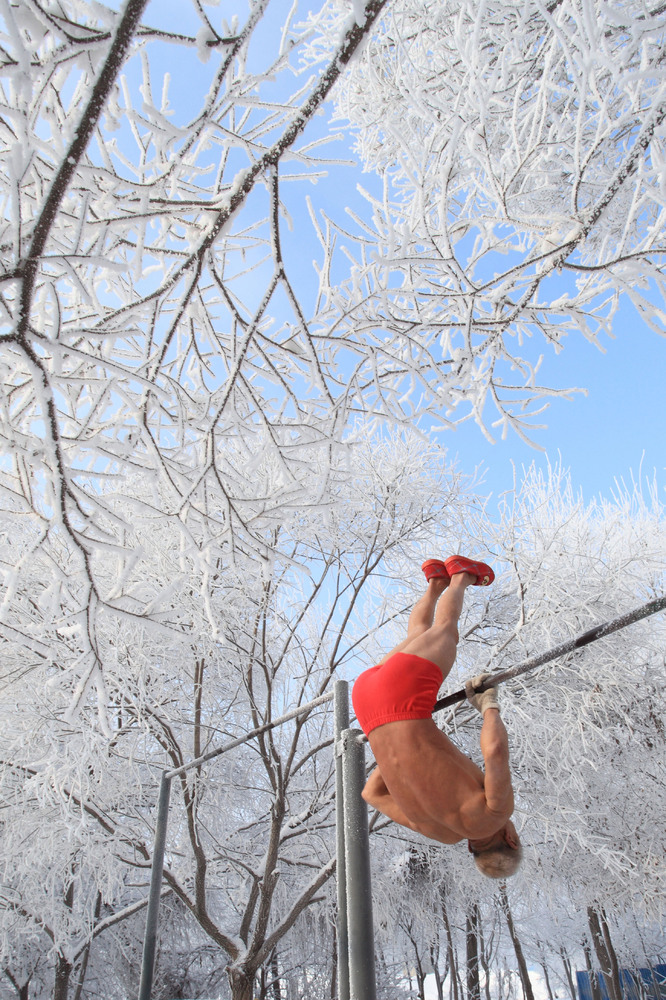
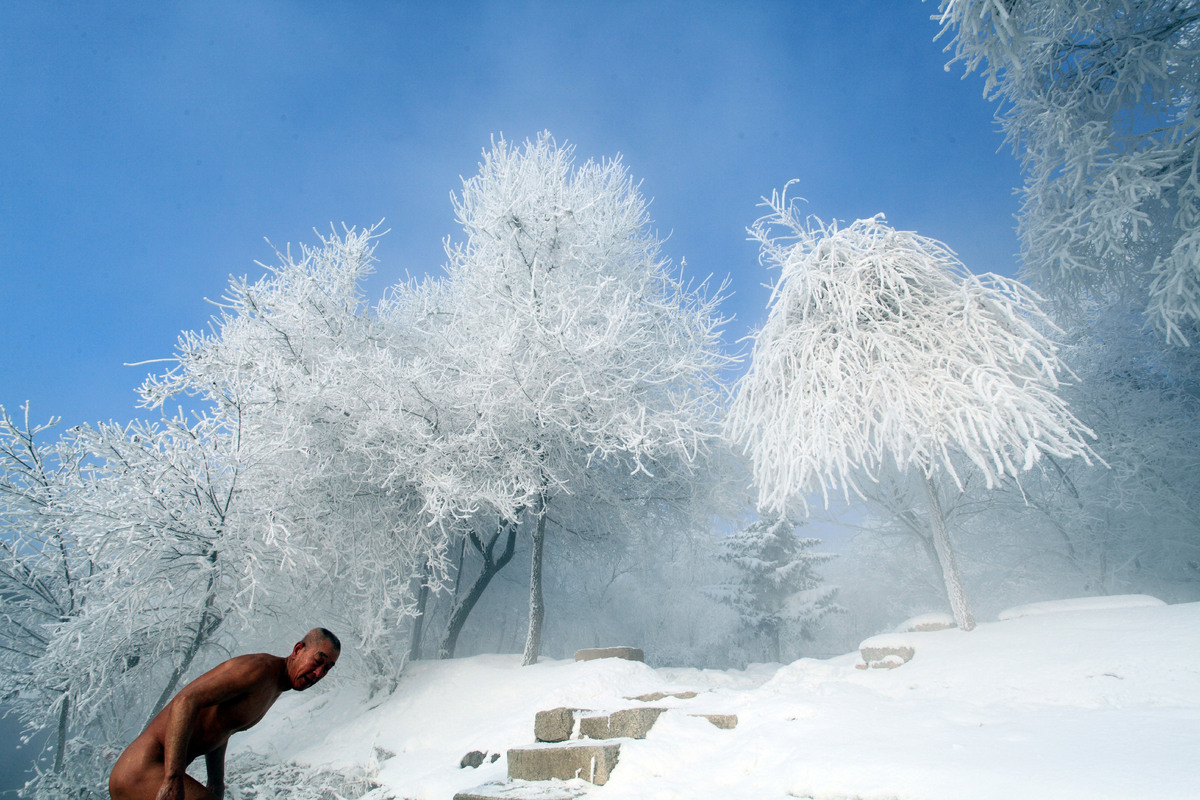
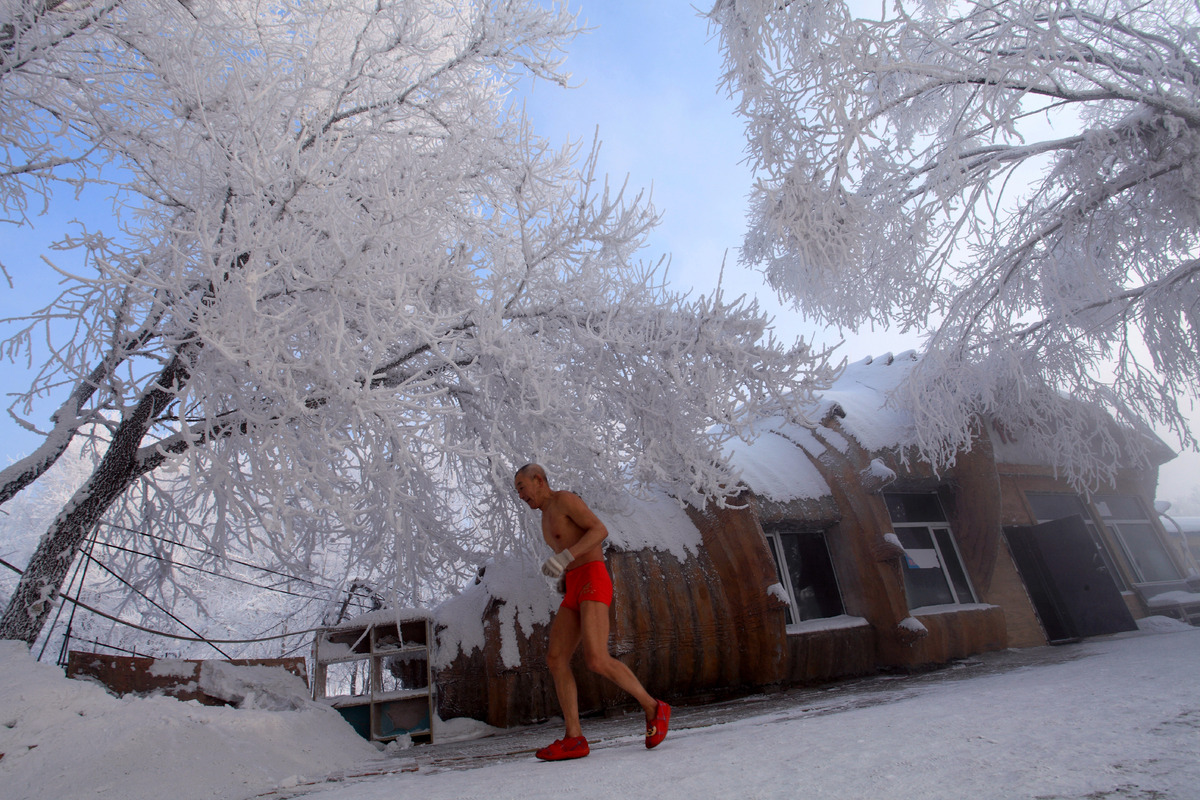
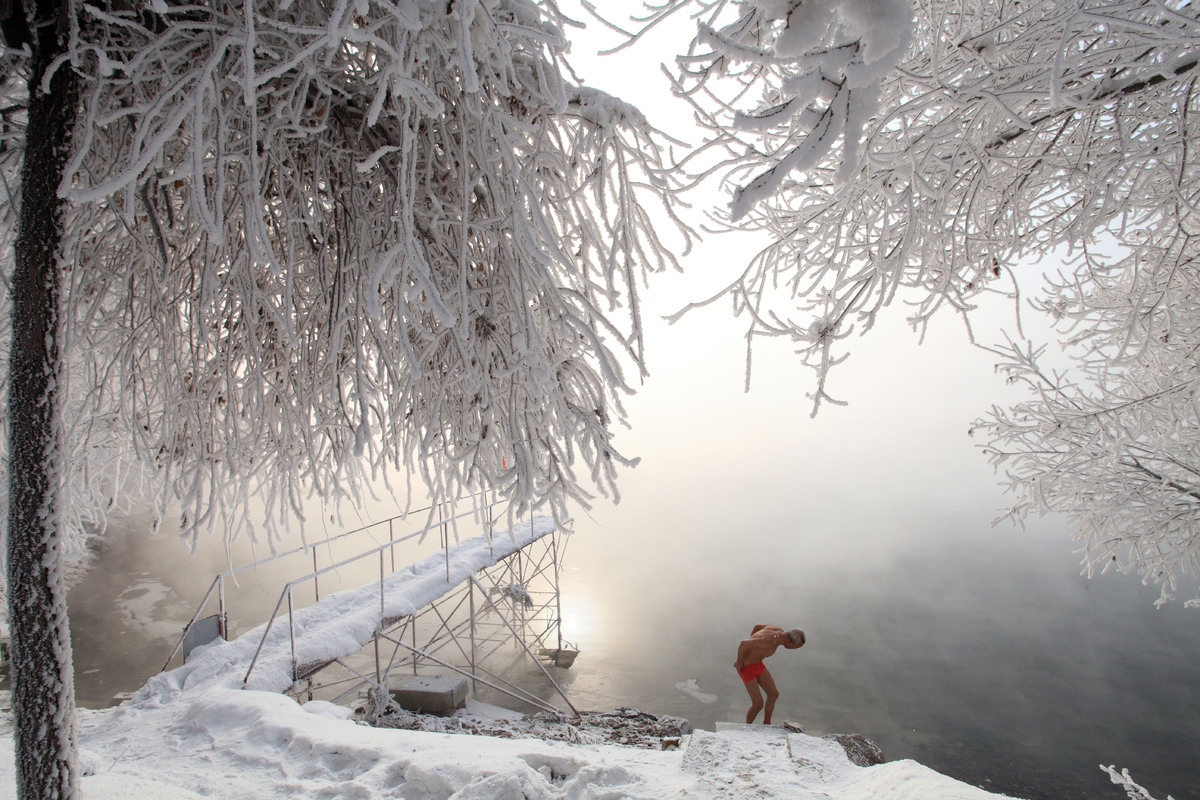
No pain, no gain: 77-Year-Old, Gao Yinyu, Stays Fit By Exercising In The Cold In His Underwear

77-Year-Old, Gao Yinyu work  out
77-Year-Old, Gao Yinyu work  out (photo by: Getty images)

You will discover more of 50s post available, who put younger bodies to shame with their chiseled physiques and youthful features. Guinness World Record holder Ernestine Shepherd lifted her way to fitness, as did bodybuilder Jim Morris. And former marathoner Mark Sisson credited exercise and a gluten-free diet for his rippling abs.

But we haven't met anyone who goes to quite the same lengths as Gao Yinyu does to stay fit. The 77-year-old retired teacher from chilly northeastern China has maintained an exercise routine that isn't for snowbirds or other warm-weather lovers: He jogs and does a series of gymnastic feats on parallel bars before taking a dip in a lake -- all in -25˚Celsius weather (we'll save you the Google search -- that's -13˚ Fahrenheit). Did we mention most of his work out is done in his underwear?

He's been doing this routine for 10 years, and, according to reports, has never caught a cold.

Our hats (and gloves, and scarves) are off to you, sir! Feel inspired by Gao's workout commitment? It's good to know a few things about exercising in the cold before you begin your own workout.
 
When you exercise, your body works to keep your temperature at an even 98.6˚ F, wrote Laura Schwecherl of the healthy living website Greatist. But help your body out by dressing in layers. The Mayo Clinic suggests a three-layer solution: a light base that can wick away moisture from your body, then a layer of fleece or wool for insulation, followed by "a waterproof, breathable outer layer."

Protecting your feet, hands and ears is important as well, as blood flows to your core and away from your extremities when you work out. This helps with that warm feeling exercising in the cold can inspire, but also leaves you at risk for frostbite, wrote Schwecherl of Greatist.

Avoid exercising in the snow, rain or in high winds, Schwecherl advised. "The body has a hard time managing its temperature when wet; water draws heat away from the body 25 times faster than air because of its higher density and heat capacity," she wrote. "Strong winds can also be dangerous, pushing air and moisture through our clothes and removing the layer of warm air that surrounds the body."
 
Staying hydrated is just as important in cold weather as it is in the heat. "Drink water or sports drinks before, during and after your workout, even if you're not really thirsty," the Mayo Clinic advised. "You can become just as dehydrated in the cold as in the heat from sweating, breathing and increased urine production, but it may be harder to notice during cold weather."

These tips are just the beginning. Make sure you also check in with your doctor for advice on how to exercise in cold weather -- especially if you have asthma or heart problems.
article source: Hufnington post

John Kerry eyes revival of Middle East peace talks


US Senator John Kerry has warned that a failure of a two-state solution in the Middle East would be "disastrous", at his confirmation hearing as secretary of state.

But Sen Kerry said he believes there is a "way forward" on peace talks between Israel and the Palestinians.

US-brokered peace talks in the Middle East broke down in 2010.

Sen Kerry sailed through his hearing to replace Hillary Clinton at the helm of the state department.

A Vietnam veteran and a senator since 1985, he was the Democratic presidential nominee in 2004, losing the election to George W Bush.

'Disastrous'
He is chairman of the Senate foreign relations committee, which conducted Thursday's hearing. It was led instead by Senator Robert Menendez of New Jersey.Sen Kerry warned "the window or door on a two-state solution could shut - and that would be disastrous for all concerned".

"Perhaps this can be a moment where we can renew some kind of effort to get the parties into a discussion to have a different track than we have been on over the last couple of years," he said, adding that it was unclear what government would emerge from Israel's recent election.

The Massachusetts senator did not give details of possible plan, saying he did not want to prejudice any new effort.

During the five-hour hearing, Sen Kerry also said "we will do what we must to prevent Iran from obtaining a nuclear weapon".

"I repeat here today: our policy is not containment. It is prevention and the clock is ticking on our efforts to secure responsible compliance," he told the panel.

He said he hoped the US and its allies would maintain diplomatic pressure against Iran, but said Iran had to prove its nuclear programme was solely for peaceful purposes.

Sen Kerry also spoke about American efforts to strengthen its relationship with China, saying it would be "a tough slog". And he described himself as a "passionate advocate" on battling global warming.

'The right choice'
He was introduced by Mrs Clinton, Republican Senator John McCain and Massachusetts Senator Elizabeth Warren.

"John is the right choice," Mrs Clinton said of her designated successor. "He will bring a record of leadership and service that is exemplary."

Her recommendation was immediately echoed by Sen McCain.

"Witnessing almost daily his exemplary statesmanship is one of the highest privileges I've had here," he said.

Sen Kerry's nomination as secretary of state opens his Massachusetts Senate seat.

The place will temporarily be filled by appointment by Democratic Massachusetts Governor Deval Patrick. A special election will follow within months.

Sen Kerry was Mr Obama's second choice, after UN Ambassador Susan Rice became embroiled in controversy over last September's raid on a US consulate in Benghazi, Libya.

Republican senators accused her of deliberately misleading the American people over the nature of the attack, which left four Americans dead.

The Obama administration angrily rejected the claims, but Ms Rice withdrew her name from consideration for secretary of state.

Why 2013 could be a game-changer on climate


As leaders gather for the World Economic Forum in Davos, signs of economic hope are upon us. The global economy is on the mend. Worldwide, the middle class is expanding by an estimated 100 million per year. And the quality of life for millions in Asia and Africa is growing at an unprecedented pace.

Threats abound, of course. One neglected risk -- climate change -- appears to at last be rising to the top of agendas in business and political circles. When the World Economic Forum recently asked 1,000 leaders from industry, government, academia, and civil society to rank risks over the coming decade for the Global Risks 2013 report, climate change was in the top three. And in his second inaugural address, President Obama identified climate change as a major priority for his Administration.For good reason: last year was the hottest year on record for the continental United States, and records for extreme weather events were broken around the world. We are seeing more droughts, wildfires, and rising seas. The current U.S. drought will wipe out approximately 1% of the U.S. GDP and is on course to be the costliest natural disaster in U.S. history. Damage from Hurricane Sandy will cost another 0.5% of GDP. And a recent study found that the cost of climate change is about $1.2 trillion per year globally, or 1.6% of global GDP.

Shifting to low-carbon energy sources is critical to mitigating climate change's impacts. Today's global energy mix is changing rapidly, but is it heading in the right direction?
Coal is the greatest driver of carbon dioxide emissions from energy, accounting for more than 40% of the total worldwide. Although coal demand is falling in the United States -- with 55 coal-powered plants closed in the past year -- it's growing globally. The World Resources Institute (WRI) recently identified 1,200 proposed new coal plants around the world. And last year, the United States hit a record-high level of coal exports—arguably transferring U.S. emissions abroad.Meanwhile, shale gas is booming. Production in the United States has increased nearly tenfold since 2005, and China, India, Argentina, and many others have huge potential reserves. This development can be an economic blessing in many regions, and, because carbon emissions of shale gas are roughly half those of coal, it can help us get onto a lower carbon growth path.
However, while gas is an important bridge to a low carbon future—and can be a component of such a future—it can't get us fully to where we need to be. Greenhouse gas emissions in industrial countries need to fall by 80-90% by 2050 to prevent climate change's most disastrous impacts. And there is evidence that gas is crowding out renewables.
Renewable energy -- especially solar and wind power -- are clear winners when it comes to reducing emissions. Unfortunately, despite falling prices, the financial markets remain largely risk-averse. Many investors are less willing to finance renewable power. As a result of this mindset, along with policy uncertainty and the proliferation of low-cost gas, renewable energy investment dropped 11%, to $268 billion, last year.
What do we need to get on track?
Incentivizing renewable energy investment
Currently, more than 100 countries have renewable energy targets, more than 40 developing nations have introduced feed-in tariffs, and countries from Saudi Arabia to South Africa are making big bets on renewables as a growth market. Many countries are also exploring carbon-trading markets, including the EU, South Korea, and Australia. This year, China launched pilot trading projects in five cities and two provinces, with a goal of a national program by 2015.

Removing market barriers
Despite growing demand for renewable energy from many companies, this demand often remains unmet due to numerous regulatory, financial, and psychological barriers in the marketplace.
In an effort to address these, WRI just launched the Green Power Market Development Group in India, bringing together industry, government, and NGOs to build critical support for renewable energy markets. A dozen major companies from a variety of sectors—like Infosys, ACC, Cognizant, IBM, WIPRO, and others— have joined the initiative. This type of government-industry-utility partnership, built upon highly successful models elsewhere, can spur expanded clean energy development. It will be highlighted in Davos this week at meetings of the Green Growth Action Alliance (G2A2).

De-risking investments
For technical, policy, and financial reasons, risks are often higher for renewables than fossil-based energy. Addressing these risks is the big remaining task to bring about the needed energy transformation. Some new funding mechanisms are emerging that can help reduce risk and thus leverage large sums of financing. For example, the Green Climate Fund could, if well-designed, be an important venue to raise funds and drive additional investments from capital markets. Likewise, multi-lateral development banks' recent $175 billion commitment to sustainable transport could help leverage more funds from the private and public sectors.
Some forward-looking companies are seeking to create internal incentives for green investments. For example, companies like Unilever, Johnson & Johnson, and UPS have been taking actions to reduce internal hurdle rates and shift strategic thinking to the longer-term horizons that many green strategies need.
Davos is exactly the type of venue for finding solutions to such issues, which requires leadership and coalition-building from the private and public sectors. For example, the the G2A2, an alliance of CEOs committed to addressing climate and environmental risks, will launch the Green Investment Report with precisely the goal of "unlocking finance for green growth".
Depending on what happens at Davos—and other forums and meetings like it throughout the year—2013 could just be a game-changer.

Landslide in China buried 14 homes and killed 46 people

landslide in China
 Chinese authorities have recovered the bodies of 46 people buried and killed Friday by a landslide that swept through a village in the steep, snow-dusted mountains of southern China, state media reported Saturday.

The landslide smothered 14 homes in Zhaojiagou village in Yunnan province, the local county government of Zhenxiong said in public statements posted on its official website.

The state-run China Central Television said Saturday that all of the victims had been recovered.

A preliminary investigation blames saturation from more than 10 days of rain and snow for the disaster.

Photos posted on the website of the Yunnan Daily, the official newspaper of the provincial government, showed rescue crews in orange jumpsuits using construction machinery to sift through massive piles of mud and earth. Behind them stood hillsides and pine trees covered in snow, signs of the unusually cold winter that has hit China.

Mudslides occur periodically in the region, which is prone to earthquakes and heavy rains. In a nearby county, 81 people died after an earthquake in September. A month later, a landslide buried a primary school, leaving 18 students and one other person dead.

10,000 Chinese Air Travelers Clash With Police


Thousands of air travelers rioted against police after being stranded at China’s Changshui International Airport in the city of Kunming over the weekend.

Hundreds of flights were cancelled when heavy fog delayed an estimated 10,000 passengers from departing the airport last week, according to state-run news agency Xinhua. Some of those passengers  had been stuck at the airport for three days.  The agency reported the massive flight delays began to hit the airport on Thursday after visibility dropped significantly.
The airport fell into a brief period of disorder when some stranded passengers grew angry with the delays and service flaws, the news agency said.

However, the AFP reported angry passengers struggled with airline staff, damaging computer equipment belonging to an airline, while police broke up scuffles.
“The passengers were really furious, they kept going to the service desk to ask for information, but didn’t get any answers,” a photographer on the scene told the AFP.

A woman is seen being pushed by the crowd against police as stranded travelers argue with police and airport officials at Changshui International Airport in Kunming, in southwestern China, after massive flight delays hit the airport and stranded thousands of travelers.
Stranded travelers are seen arguing and crowding an airline counter at Changshui International Airport in Kunming, in southwestern China's Yunnan province, after massive flight delays hit the airport and stranded thousands of travelers.
 
Support : Creating Website | Johny Template | Mas Template
Copyright © 2011. Daily Headlines - All Rights Reserved
Template Created by Creating Website Published by Mas Template
Proudly powered by Blogger