Headlines News :
Showing posts with label France. Show all posts

Eurozone recession deepened at end of 2012


The eurozone recession deepened in the final three months of 2012, official figures show.

The economy of the 17 nations in the euro shrank by 0.6% in the fourth quarter, which was worse than forecast.

This followed news that Germany, France and Italy all saw bigger-than-expected contractions in the period.

Germany, the eurozone's biggest economy, with a fall of 0.6%, saw the deepest contraction since the height of the financial crisis.

It was hit by a sharp decline in exports.

The French economy shrank by 0.3% in the fourth quarter, while Italy showed 0.9% contraction for the period.

Italy has been in recession since mid-2011. Prime Minister Mario Monti has introduced severe austerity measures to cut its debt and reassure markets that it is a safe country to lend to. An election is due on 24 February.

Some analysts have predicted France is heading for a recession - usually defined as two consecutive quarters of contraction.

However, France's central bank recently forecast that the economy would expand in the first three months of 2013.

'Growth re-thought'
The latest GDP number means that the French economy barely grew in 2012.

French Finance Minister Pierre Moscovici admitted on French radio that the government may need to rethink its growth forecast of 0.8% for 2013.

"We note that the figure for 2012 is not good, around zero, and so we also know that growth for 2013 will have to be re-thought."

He added that he did not want to "condemn the country to recession" by adding "austerity to the difficulties of today".

French President Francois Hollande is trying to make France more competitive by slashing government spending and relaxing labour regulations.

'Outlook promising'
The German statistics office said: "Comparatively weak foreign trade was the decisive factor for the decline in the economic performance at the end of the year: in the final quarter of 2012 exports of goods declined significantly more than imports of goods."

But economists remain upbeat about the outlook for Germany.

"This is a temporary period of weakness in the German economy rather than the beginning of a long period of stagnation or even a recession " said Andreas Rees, chief German economist at the bank Unicredit.

He added: "The outlook is very promising. The chances that the economy will return to growth at the beginning of this year are very good."

That sentiment has been backed up by recent surveys. January's closely watched business confidence survey for Germany hit its highest level since before the eurozone crisis.

Eurozone purchasing managers' index (PMI) surveys for January also indicated the worst may be over. Germany, Spain and Italy all showed signs of stabilisation - although in France the downturn deepened.

Gay rights: How U.S. leads the way


Philippe Coste is the staff New York correspondent for the weekly L'Express. He also writes a blog on "lexpress.fr." His book, recently published in France, is about populism and the American justice system: "Quand la justice dérape" (When Justice goes off track).

A week before Barack Obama became the first U.S. president to mention gay rights in his inauguration speech, the French had already made history on that matter. Believe it or not, on January 13, there were half a million people on the streets of Paris, demonstrating against gay marriage.


The French Catholic church is supposed to be at its last gasp, but it seemed strong enough to mobilize parishes, religious school parents and the common conservative citizen against a project of "mariage pour tous" (marriage for everybody), that had long been part of the new Socialist President François Hollande's election platform. Now that the law is being debated in parliament, it will likely pass within a month, but the ruckus will have stripped it of provisions deemed essential to the gay community: the equal rights, even if they are married, to start a family and raise their children. It may also trigger off a new culture war.The Church would not have enjoyed that success alone, had it not found the most unexpected and efficient leader, in the person of Virginie Tellenne, alias "Frigide Barjot." The nom-de-scène of this enterprising entertainer, known for her long-time connection to the RPR, the party of Jacques Chirac, means "cookoo," and was a rallying cry for silly demonstrations, in the 80s, against cold weather in Paris, before she met God in 2004, and proclaimed herself "Jesus's PR person."I saw her recently on a French TV channel while, in her trademark miniskirt and fishnets, she was debating a lesbian activist named Caroline Fourest, who asked Barjot how she felt about "gathering hundred of thousand of people in a demonstration against the equal rights of another community." She answered that she "loved gays," reminding the audience she often "partied like crazy" at Bananas, a well known hangout of the hip Parisian LGBT crowd. Translation: gay was okay as long as it stayed in the "cage aux folles," in drag, in an entertaining margin, but certainly not in the mundane realities of everyday life, where it is way more complicated.Indeed. Frigide, just like a majority of the French, supported the civil union enacted in 1999, the so-called Pacs, designed mainly for same sex couples. It gives some rights, but doesn't legitimate partners as parents. Marriage would. And there is the rub: adoption, medically assisted procreation. "What about the bloodline? What about mother nature, and the right of kids raised that way to know their true origin?, shrieked Frigide, oblivious to the fact that children adopted or medically procreated with donated eggs by straight parents have the same problem. It all boiled down, at the minute of truth, to that question: "What about their right to be raised normally? she asked. By a mommy and a daddy?"Having witnessed the debate on same-sex marriage in the United States, that episode confirms one more difference between our cultures. Contrary to the Americans who, in spite of blunt evidence, still worship the act of marriage, with its fairy-tale rituals of proposing and funny kneeling, the French have a much more pessimistic, more realistic even, vision of the knot. But when it comes to families and raising kids, they seem to believe in the enchanted world of yore.In America, the same-sex unions were often seen as the sinful problem, as the Christian banners, "Adam and Eve, not Adam and Steve" proclaimed around the country. But children were nobody else's business for those willing to adopt, or procreate with the methods available to anyone able to pay for donated eggs, sperm or a surrogate mother.France is another story. In a country where unrealistic conditions slacken usual adoption, gay prospective parents have had to act as any straight single person would, ask for an adoption authorization, and, to improve the chances ... get the child in another country. The law debated these days may grant their partner equal parental rights for adoption. As for medically assisted procreation, it is another problem: As of today, it is simply forbidden unless the couple is heterosexual and married or able to prove they has lived together for at least two years. Surrogate mothers are prohibited in France, plain and simple.

Hollande himself, though he promotes gay marriage as a progressive symbol, admitted he doesn't personally favor allowing medically assisted reproduction to homosexuals, and with the assent of many socialist party officials, had these corresponding measures postponed -- for parliament to decide -- as another law to a future debate, in March.

One reason, besides the obvious fear of a culture war with the conservatives about sacred family values, maybe the fact that the government already pays four attempts of medically assisted procreation to heterosexual couples and doesn't wish to have to extend this costly favor to gays, nor, more importantly, does it want to change at any price the national moral doctrine.

Assisted reproduction is considered in France only as a way to treat the medical condition of infertility. Being gay is not an illness, neither is, for a woman, the fact that she has no man. As a consequence, French babies are born en masse from single and not-so-single mothers in nearby Belgium or Spain, where specialized services are legally available for a price. "These children already exist in France," concluded Caroline Fourest on the show."They were born from gay parents and they simply deserve to have it recognized."

Mali: French-led soldiers 'in control of Gao'


French-led troops in Mali have taken control of the northern town of Gao, the French defence ministry has said.

The town was previously a stronghold of Islamist fighters after it was seized by an alliance of Tuareg rebels and Islamists last April.

French-led troops moved into Gao itself after earlier securing the airport and a strategic bridge to the south.
French officials said troops from neighbouring Niger and Chad would now move into the town to help secure it.
They also suggested that government control was already being restored, with the mayor of Gao's returning on Saturday after being ousted by the Islamist takeover.

There was no official death toll from the offensive, but the French army said "dozens" of Islamist fighters were killed in the overnight operations, without any casualties on the French and Malian side.

After a punishing series of air strikes on jihadist positions in Gao, Malian and French forces took first the airport and then the bridge over the river Niger, before being able to confirm they had taken control of the whole of the town.

Malian officials spoke of scenes of joy on the streets of Gao, but also of some looting.

Gao's mayor, who has been in the capital Bamako since the town fell to the Islamists early last year, has been flown back in.

Chadian and Nigerian forces, meanwhile, are poised to pushed up from the Nigerien border - about 200km to the south - in order to reinforce the French and Malians.

French-led troops are also reported to be advancing on the town of Lere to the west.

It all appears to confirm a picture of rolling successes for the French and Malians, as they retake the main population centres of the north, says the BBC's Hugh Schofield in Paris.

Air-strikes
The fall of Gao, northern Mali's most populous town, marks a significant advance for French and Malian troops.Islamists seized a vast area of northern Mali last year and have imposed strict Sharia, or Islamic law, on its inhabitants.

France intervened militarily on 11 January to stop them advancing further south.

It has already deployed 2,500 soldiers on the ground in Mali as well as launching air strikes.

With the capture of Gao, the French are increasingly confident of pushing the Islamists out of all the major population centres in the north, says our correspondent.

The other major northern towns of Kidal and Timbuktu remain in Islamist hands. But, French Prime Minister Jean-Marc Ayrault said the historic town of Timbuktu - an important symbol which has also been under Islamist control for most of the last year - should also soon be retaken.

The French are confident that this phase of the campaign will soon be over, adds our correspondent, though of course the vast desert hinterland offers the Islamists endless opportunities to retreat and regroup.

The UN refugee agency says more than 7,000 civilians have fled to neighbouring countries since 10 January to escape the fighting.

In a statement earlier, Defence Minister Jean-Yves Le Drian confirmed that 3,700 French troops were engaged in Operation Serval, 2,500 of them on Malian soil.

Gao was one of the first rebel-held areas to be targeted by air-strikes after France decided to intervene in its former colony, a decision which took many by surprise.

Aid pledged
A UN-backed international force had not been expected in the west African state until the autumn.

Several African countries have pledged military aid to help the Malian government win back control of the north.

On Friday the African Union asked the UN Security Council to authorise immediate logistical help to allow the 6,000-strong force to deploy quickly.

It also recommended civilian observers to monitor the human rights situation in the areas which have come back under the control of the Malian government. Human rights groups have accused the Malian army of committing serious abuses.

Republican leader says Obama must back France in fight against al-Qaida...


A leading Republican called Tuesday for President Barack Obama to support France’s military intervention against the “cancer” of al-Qaida-linked militants in North Africa.

Rep. Ed Royce, chairman of the House Foreign Affairs Committee, said in a statement that he welcomed France’s decision to send troops and warplanes “to combat this serious security threat” in Mali.
“The vast area of northern Mali gives these al Qaeda-linked militants space to operate, and the weapons flowing out of Libya makes them deadly. This cancer could not go unaddressed,” he said in the statement.
"This isn't avant garde for the French. They have shown leadership in working with Ivory Coast and other African governments to improve security.  Paris understands the high stakes,” he added. "I expect the Obama Administration to honor appropriate requests for intelligence and logistics support from France.”
Royce stressed that “we should have our ally's back" when dealing with the “shared threat.”

France has sent about 500 troops to Mali and is sending about 1,000 more along with armored vehicles.
They are taking on at least three Islamic militant groups, including al-Qaida in the Islamic Magreb, U.S. national security officials told NBC News Monday, speaking on condition of anonymity.
The sources added that they were being helped by U.S. military and intelligence operations and that the U.S. would also provide transport and refueling capability for the operation. U.S. drones and spy satellites were also being used.
Panetta: No U.S. 'boots on ground'
Defense Secretary Leon Panetta said Tuesday at a press conference in Portugal that "there is no consideration of putting any American boots on the ground at this time" in Mali, The Associated Press reported.
He added that al-Qaida affiliates in Mali did not currently pose a threat to the United States but stressed "ultimately that remains their objective."
On Monday, State Department spokeswoman Victoria Nuland told reporters that “we share the French goal of denying terrorists a safe haven.”
In a statement released by the U.K.’s Foreign Office, political directors of the G8 group of leading nations said they had discussed the situation in Mali at a meeting in London Tuesday and “expressed grave concern.”
“They noted that it is essential to halt the offensive by terrorist groups towards southern Mali, to prevent the collapse of the Malian state, and to accelerate the implementation of UN Security Council resolutions in all their dimensions: political, security and humanitarian,” the statement said.

Terrorists Taunt France After Failed Rescue Mission


Al Qaeda-linked terrorists in Africa today posted gruesome pictures of a man they said was a French commando killed in a failed operation to rescue a French intelligence agent overnight Friday.

The pictures, released via Twitter by the Somalia-based terror group al-Shabaab, show a white male in a dark blue shirt and camouflage pants surrounded by military gear and weapons. The shirt is covered in blood and the man appears to be dead. As a caption for one photo that shows the man's crucifix necklace, al-Shabaab tweeted, "A return of the crusades, but the cross could not save him from the sword."

In another tweet, al-Shabaab showed a picture of the man and addressed the French president directly: "Francois Hollande, was it worth it?"

The raid was meant to free "Denis Allex," the pseudonym of an agent of the French foreign intelligence service DGSE who was kidnapped in Somalia in July 2009.

Late Saturday, Hollande acknowledged that two French soldiers had been killed in the operation and that it was likely that Allex was executed by his captors. Hollande offered his condolences to the families of the dead but said the operation "confirms France's determination not to give in to the blackmail of terrorists."

Today al-Shabaab put out a press release claiming it had killed "several" French commandoes, but that Allex was still alive. The group said it had "reached a verdict" on what to do with him and would announce it in coming hours.

French Defense Minister Jean-Yves Le Drian said Saturday that the raiding party slipped secretly into the area but was met with "very strong resistance" on the ground and "very violent combat ensued." In addition to the French casualties, Le Drian said 17 terrorists were killed.

President Obama revealed Sunday that U.S. military forces had been involved in the mission, providing "limited technical support." Obama was required to notify Congress of the action, since it amounted to a deployment of U.S. military personnel, and released the notification letter to the public. U.S. aircraft "briefly entered Somali airspace to support the rescue operation, if needed," but did not use their weapons, the letter said.

Al-Shabaab formally allied itself with al Qaeda in February 2012, but that didn't stop African forces from handing the terror group a series of military defeats in Somalia, eventually pushing them out of all major urban areas in the East African nation.

France tells internet service provider to end ads block

A major French internet service provider (ISP) has agreed to abandon its ad-blocking policy - seen as a swipe against Google - after a minister intervened. Digital Economy minister Fleur Pellerin said she persuaded Free to restore full access to all content on the internet, including Google ads.

Free started blocking ads last week when it updated home router software. It was seen as forcing Google to pay its fair share to service providers. The French minister said: "No actor can jeopardise the digital ecosystem in a unilateral way."

Free has argued in the past that Google does not pay its way when ISPs are forced to increase investment in running services like YouTube, which take up a lot of bandwidth. Google's AdServe online advertising software - which allows online businesses to target their audiences in exchange for a share of the advertising profits - is used on many websites.
'Cuckoo bird'

Philippe Jannet, the former president of Geste, the French online publishers association, said that when operators "see Google come in like a cuckoo bird and make profit off the internet service they provide without receiving a penny in return, it's normal that they get mad".

The move by Free - France's second biggest ISP with more than five million subscribers - would have cost Google up to one million euros every day, a source told news agency AFP.

"That's what would push the giant to speak to the little operator," he added.

Ms Pellerin said she did not have an estimate yet of the financial impact from the fallout. She has scheduled a meeting with Google about Free's actions. A Free spokeswoman declined to comment on the matter.

Google spokesman Al Verney said: "We are aware of Free's actions and are investigating their impact."

(bbc.com)

Plane crash near French Alps kills 5


A French-Moroccan family of five was killed Saturday when their plane crashed near the French Alps, authorities said.

It was not immediately clear why the twin-engine plane went down. Everyone aboard died -- a man, his wife and their three children -- Virginie Favier, a local police captain, told reporters.

The family had been returning to Morocco after spending their holiday in the French Alps, she said.
Gilles Rabault, another police captain, told reporters that the plane disappeared off the radar and crashed shortly after takeoff from an airport near the southeastern city of Grenoble. Emergency workers responded after a resident reported the crash.

"We felt a big shake. The crash happened just below my house. At the beginning, I did not know what it was. We found out after firemen came that it was a plane crash. We did not see the wreckage," a witness, identified only as Leo, told CNN affiliate M6.

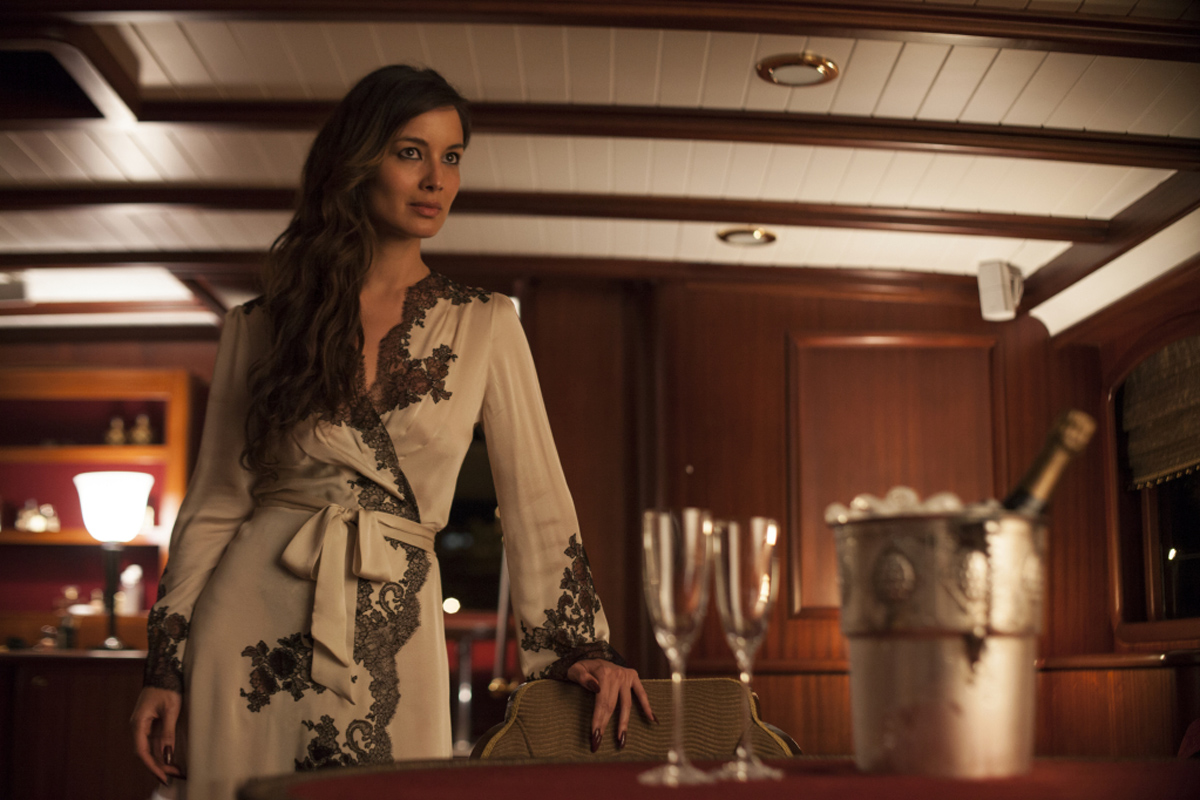
Bérénice Marlohe - photo gallery

Bérénice Lim Marlohe
Bérénice Lim Marlohe (born 19 May 1979) is a French actress. She played Bond girl Séverine in the twenty-third James Bond film, Skyfall. Her television credits include Père et Maire, Femmes de loi, and Equipe médicale d’urgence. She has played in the French comedy Un bonheur n'arrive jamais seul with Sophie Marceau (a former Bond girl herself), although not appearing in the credits. She is also a "brand ambassador" for Omega Watches.

Marlohe was born in Paris, France. Her father, a doctor, is of Chinese and Cambodian descent, while her mother, a teacher, is French.She originally held aspirations of becoming a pianist, as well as an artist, studying at the prestigious French arts school Conservatoire de Paris for ten years.

She had trouble getting on screen roles in France because people did not think she fit the mould of a French actress. Before Skyfall, her performances were primarily rooted in small roles on French TV.

She is known to be a strong believer in fate. During an interview, she stated that she dreamt of acting alongside Javier Bardem six months before her Bond audition. After the dream, she knew that everything would be fine. It was not until the second audition for Skyfall that someone actually mentioned to her that Bardem might also be cast.


Gerard Depardieu meets Putin, and get Russian passport

Gerard Depardieu meets Putin

French actor Gerard Depardieu has met President Vladimir Putin and has been handed his new Russian passport. The actor had announced he was seeking Russian citizenship after the French government criticised his decision to move abroad to avoid higher taxes. Mr Depardieu met Mr Putin in Russia's Black Sea resort of Sochi.

Mr Depardieu was then given his new passport, although the president's spokesman said Mr Putin did not hand it over personally. Mr Depardieu and Mr Putin shook hands and hugged each other at the meeting in Sochi. Earlier this week, Mr Putin signed the decree granting Russian citizenship to Mr Depardieu.

The actor responded by writing an open letter saying: "I love your country, Russia - its people, its history, its writers. I love your culture, your intelligence." Mr Depardieu went on to describe Russia as "a great democracy, and not a country where the prime minister calls one of its citizens shabby".
'Friend of Putin'

Mr Depardieu's highly publicised tax row began last year after new President Francois Hollande said he would raise taxes to 75% for those earning more than 1m euros (£817,400). The actor accused the socialist government of punishing "success, creation and talent", and announced in early December that he would move to Belgium. French Prime Minister Jean-Marc Ayrault branded his decision to move abroad as "shabby and unpatriotic".

The actor, described by Mr Putin as a friend, has developed close ties with Russia, which has a flat 13% personal income tax rate. He currently appears in an advertisement for Sovietsky Bank's credit card and is prominently featured on the bank's home page. In 2011, he played the lead role in the film Rasputin, a Franco-Russian production about the life of eccentric monk Grigory Rasputin.

article source: BBC
 
Support : Creating Website | Johny Template | Mas Template
Copyright © 2011. Daily Headlines - All Rights Reserved
Template Created by Creating Website Published by Mas Template
Proudly powered by Blogger